Nerve Health

If You've Been Living With Burning, Tingling, or Numb Feet — the Process Behind It Is the Same One Now Linked to America's #1 Cause of Non-Traumatic Amputation

For thousands of Americans, the burning and numbness in their feet was only the beginning of a longer story — until researchers finally identified the process driving it, and what may be done to address it before the progression becomes irreversible.

By The Nerve Report Editorial Team · April 17, 2026 · 5 min read
Person sitting at home looking at their feet with concern

For many Americans, what starts as burning and numbness in the feet is only the beginning of a longer story most doctors never explain.

There is a moment thousands of Americans describe in nearly the same words. It might come when a family member quietly suggests they shouldn't drive anymore. Or when someone has to wait outside the bathroom door, just in case. It rarely happens all at once. It almost always starts with burning or tingling in the feet at night — and progresses from there.

For most of these patients, the medications prescribed — gabapentin, pregabalin, creams, painkillers — were designed to mask the sensation, not stop the underlying process. The pain dulls. The burning quiets for a few hours. But the damage inside the nerve fibers continues. And for a significant number, the endpoint of that progression is exactly what neuropathy is best known for in medical statistics: non-traumatic amputation.

What researchers have now found, looking deeper than standard tests, is that this progression is not random. It follows a pattern. And that pattern is something virtually no conventional treatment has been designed to interrupt.

Why the Burning Keeps Coming Back — And What Happens When the Real Process Is Never Addressed

For decades, the standard explanation has been the same: aging, diabetes, poor circulation. Manage the pain. Take the pills. The problem is that none of these approaches were built to address what's actually happening inside the nerve fibers — and the damage continues, undetected and untreated, while the symptoms are silenced.
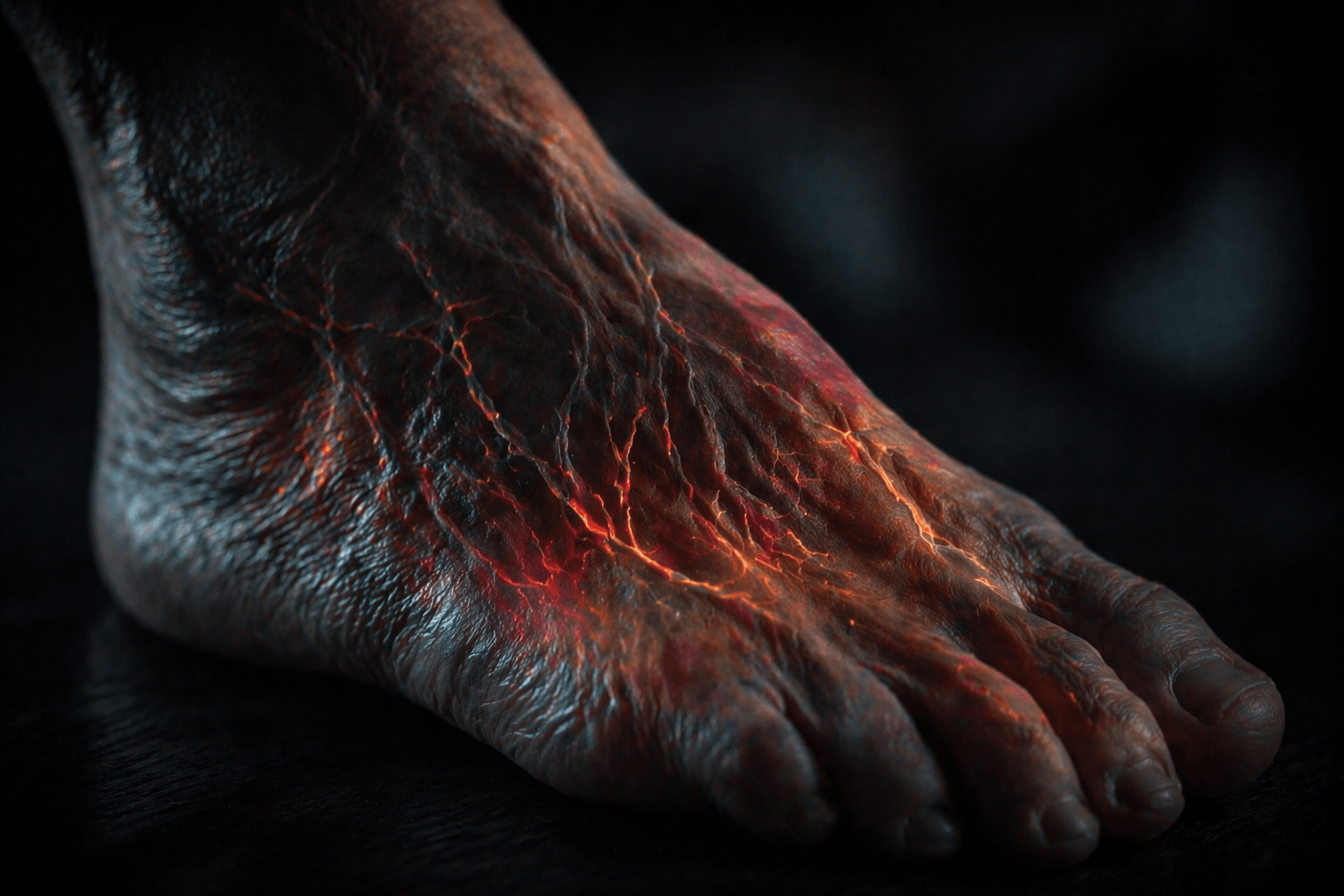
Illustration showing nerve pathways in the human foot

Researchers have identified a specific process progressively damaging the protective structures around nerve fibers — invisible on standard tests, undetected until significant damage is already done.

Recent studies — including findings published through Johns Hopkins University School of Medicine and flagged by the National Institutes of Health (NIH) — have identified a specific process at the nerve level that progressively degrades the protective structures around nerve fibers. It does not appear on standard diagnostic tests. It rarely triggers concern in routine medical visits. And it advances so gradually that by the time most patients fully understand what is happening, the damage is no longer easy to reverse.

"By the time most of these patients came to us, they had been managing symptoms for years — without anyone ever attempting to stop the process producing them."

The cost of that delay is what most people don't see in the statistics. It's the men who can no longer climb the stairs without help. The women who depend on a son or daughter to get them through a normal day. The husbands who quietly cry alone because their wives now have to help them with things they never imagined needing help with. By the time the conversation about surgery begins in the doctor's office, most of those families wish they had been told what was happening years earlier.

Barbara O'Neill, a health researcher and natural health educator with over two decades of experience in nerve health, has spent years working to bring this finding out of academic papers and into the hands of people who still have time to act on it.
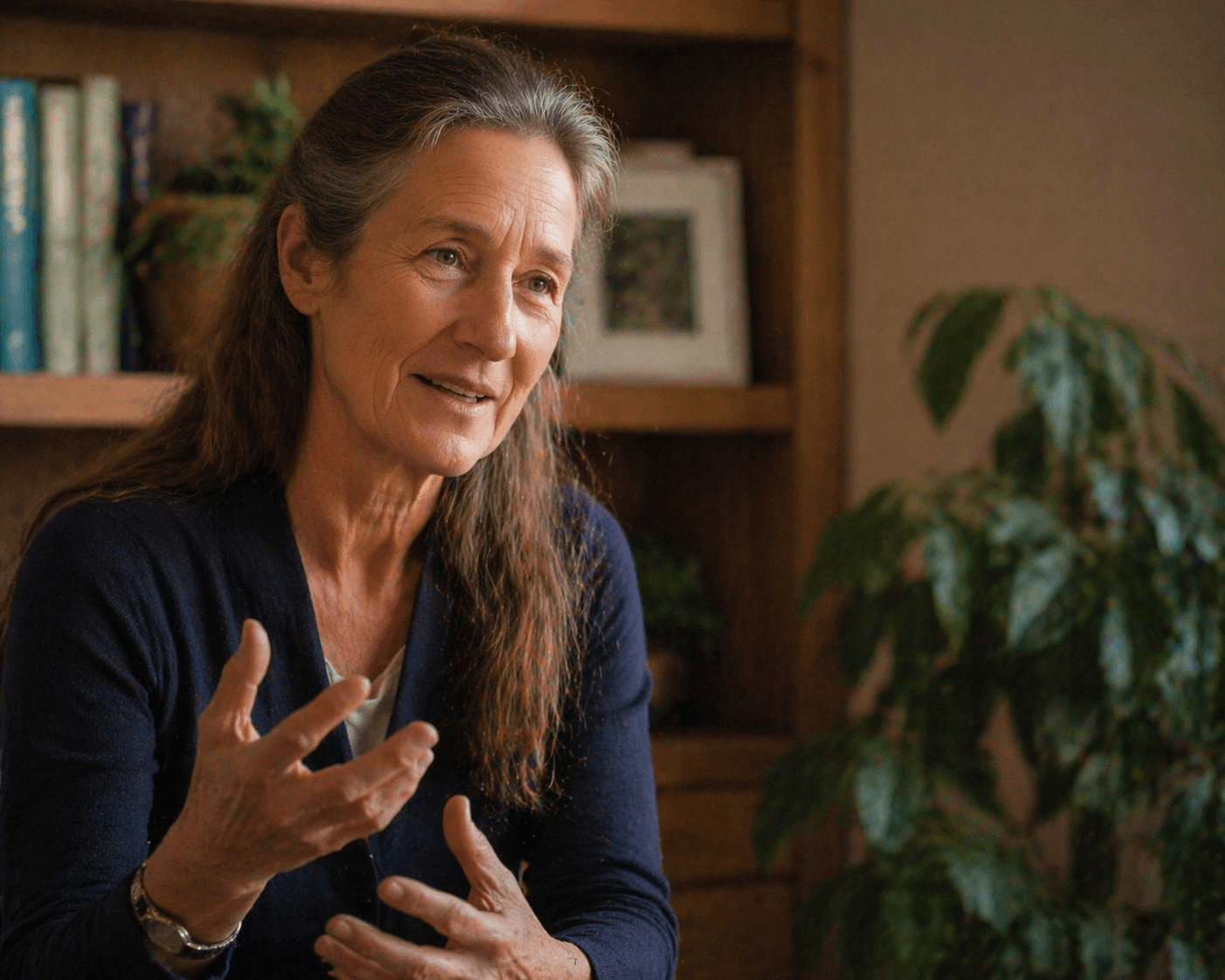
Health researcher Barbara O'Neill

Health researcher Barbara O'Neill has spent over 20 years investigating the process behind nerve deterioration — and what may be done before the window closes.

In her recent presentation, she walks through exactly what the process is, how it advances, and what may be done to address it before the progression reaches the point where the options become drastically more limited. Many viewers describe it as the first time anyone had explained not only what they were feeling — but where it was heading, and why nothing they had tried had stopped it. There is no guarantee it will remain publicly available.

Barbara O'Neill's full presentation explains the process behind advancing nerve symptoms — and what thousands are now doing about it before the window closes.

Watch the Free Presentation →

What People Are Saying After Watching the Presentation

★★★★★

"I had burning in my feet for 9 years. My family was starting to have conversations I didn't want to be part of. After I watched this presentation and finally understood what was really going on inside my nerves, everything started to shift. For the first time in almost a decade, I can feel the floor under my feet again."

Margaret T.
Age 71 · Tampa, Florida
★★★★★

"The numbness in my feet had gotten so bad I was afraid to walk to the mailbox. My kids were talking about a wheelchair and looking into home care. That was four months ago. Today I walked a full mile with my granddaughter. No cane. No fear. I'm not a burden to anyone."

Robert K.
Age 68 · Columbus, Ohio
★★★★★

"I was on gabapentin for 6 years and getting worse. My wife had to help me with things I couldn't bring myself to talk about. I cried about it alone. After watching this presentation everything finally made sense. Within weeks the burning started fading. My wife says she has her husband back."

James W.
Age 74 · Austin, Texas

These are not isolated cases. For each of them, the progression had already taken things they hadn't expected to lose — their independence, their dignity, the simple ability to go through a day without depending on someone else. For some, understanding what was happening inside their nerves came just in time.

Senior person walking outdoors with confidence

The Presentation Reaching 42,000 Americans — Many Before They Lost More Than They Had To

In this free presentation, Barbara O'Neill walks through the process researchers have identified behind advancing nerve symptoms — and the approach thousands are now using to address it at the source, before the progression reaches the point where the options become drastically more limited.

There is no guarantee this presentation will remain publicly available.

Watch the Free Presentation While It's Still Available

Watch the Free Presentation Now →